
Alexa Miars
LOOK DEVELOPMENT + LIGHTING
3D Look Development
DEMO REEL
PROJECT NAVIGATION
STONE LIONS DON'T ROAR CHARACTER LOOK DEVELOPMENT
One of my primary responsibilities as Look Development Lead was developing and executing the look of our characters. This includes the hand-painted textures, the hair, the fabric pilling, and the brushstroke card placement.
hair cards modeled in Maya, textured in Substance Painter, assembled in Houdini, rendered in Arnold
Responsible for all look development, Chi lighting, and Em lighting.
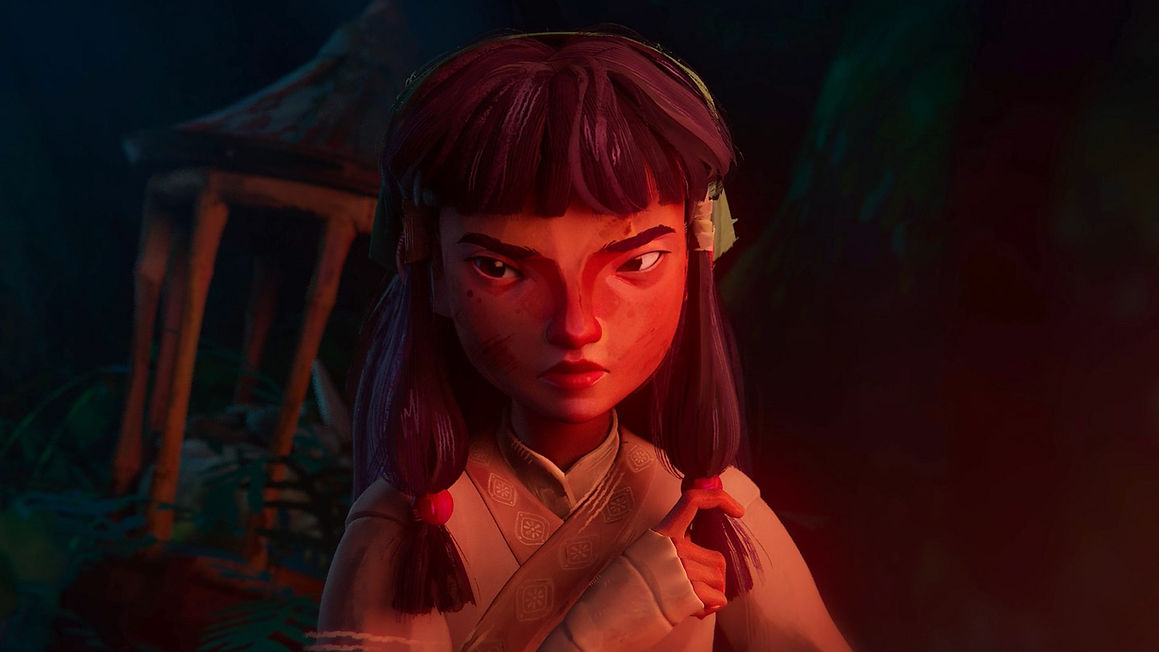





The card layers were broken up into the stages of how hair is often painted in digital illustrations– flat base pass, rake pass, chalky stroke pass, and scribble render pass. The upper layers are constructed to react to light like flyaways, which allows for the cinematic rim lighting the film's visual style demanded.


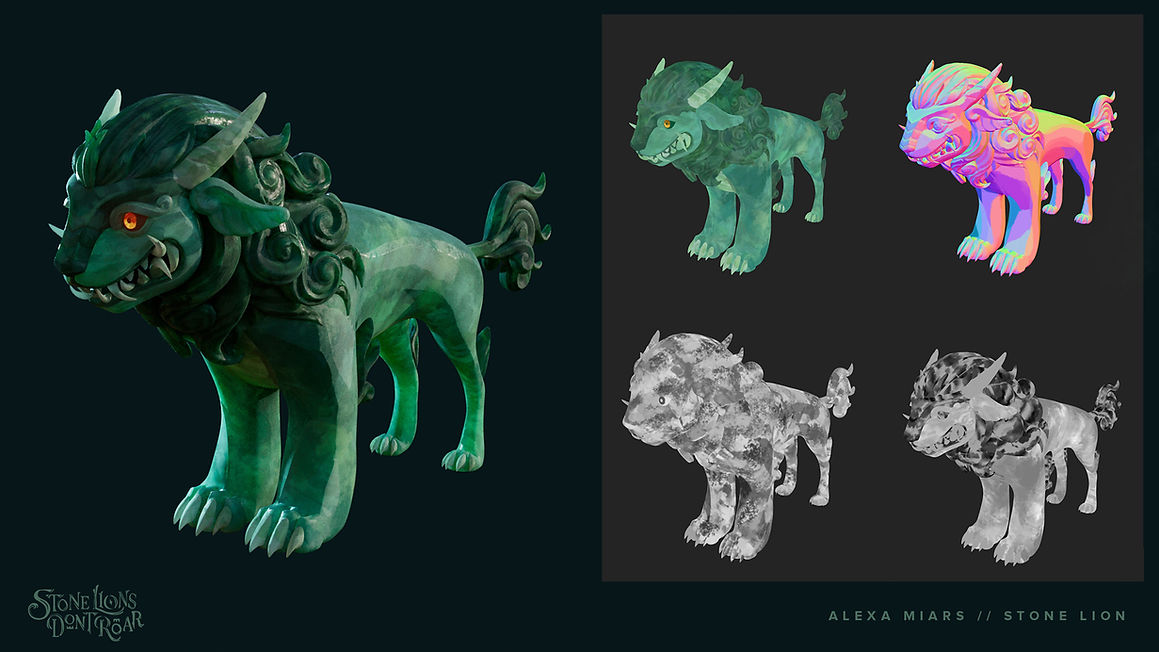
STONE LIONS DON'T ROAR ENVIRONMENT LOOK DEVELOPMENT
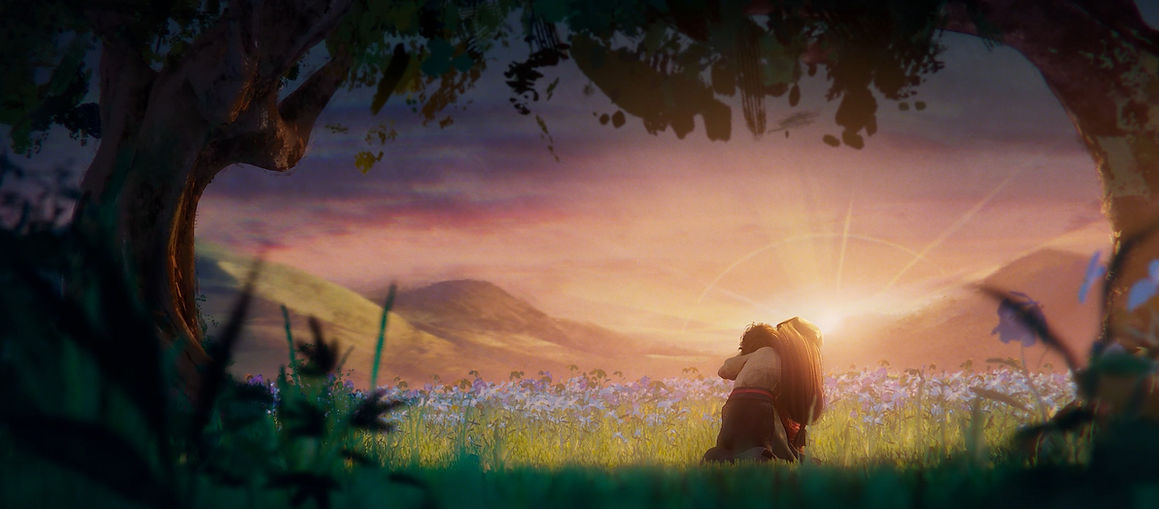
Tasked to establish a style for the fantastical short film "Stone Lions Don't Roar," I created a Look Development test based off of the concept art of Leah Whalen, our director. My priority was to create materials that would be responsive to the extreme stylistic lighting the of the film while not sacrificing the illustrative style the concept team desired. To accomplish this, I developed assets and shaders alongside a workflow for painting normals, scattering cards, and adjusting foliage coloring based on factors like position.
modeled in Maya, tileable base textures made in Substance Designer, textured in Substance Painter,
assembled in Houdini, rendered in Arnold
Responsible for all look development excluding the bridge, waterfall, and fire wisp.


Before I started experimenting, I analyzed the works of our concept team, the final renders of animated films with similar styles, and real life references to prepare. This stage helps me identify key features of the target style as well as create a game plan for manipulating shaders and materials to reflect the style.


Responsible for all look development.
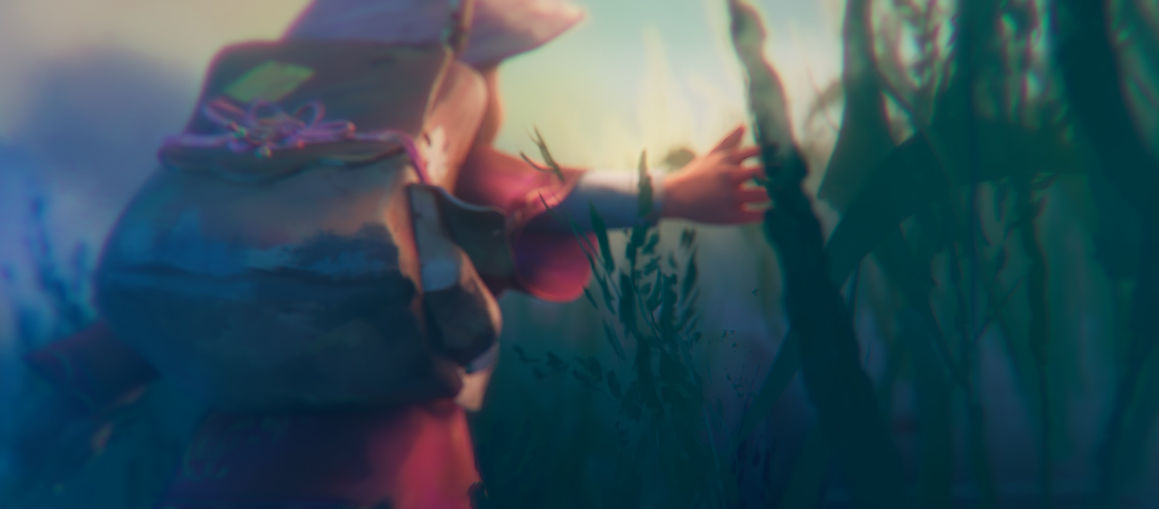
Responsible for all look development, set dressing, lighting, and compositing.
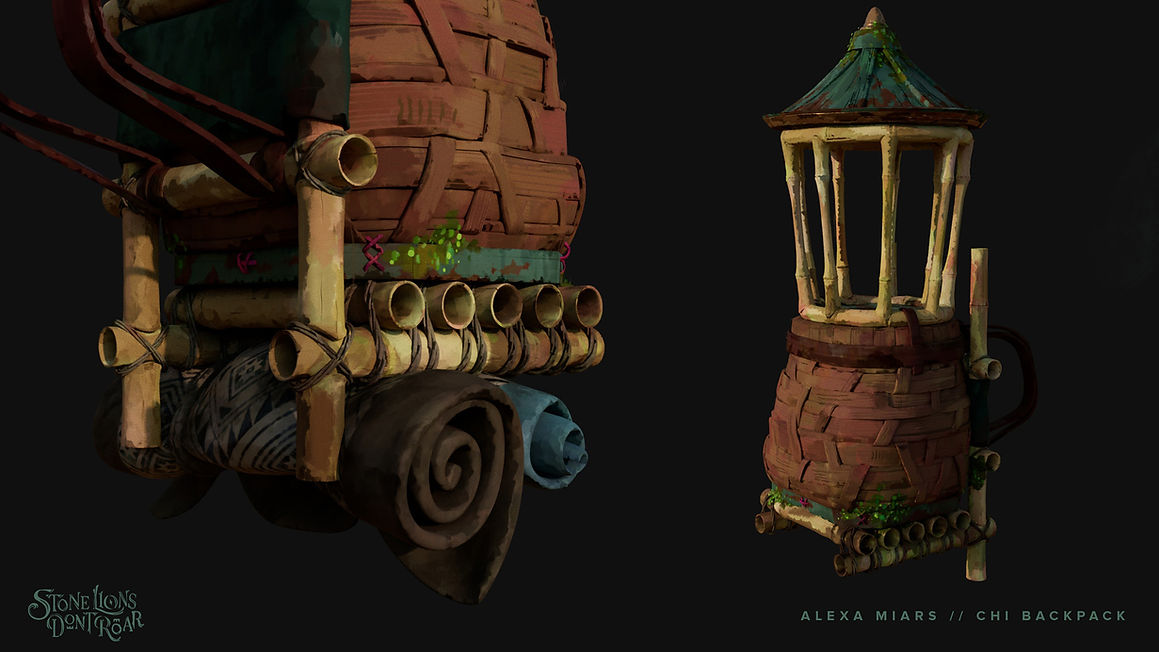
STONE LIONS DON'T ROAR LANTERN LOOK DEVELOPMENT
modeled in Maya, tileable base textures made in Substance Designer, textured in Substance Painter,
assembled in Houdini, rendered in Arnold
Responsible for all except concept.


PATCHWORK DRAGON LOOK DEVELOPMENT
This stuffed animal is a gently loved patchwork dragon that was handmade for a young girl who was always looking up at the stars. My aim was to replicate the subtle wear of fabrics on a toy that has been used but not mistreated.
patches and threads modeled in Maya, textured in Substance Painter, fabric pilling and felt made in XGen, rendered in Arnold
Responsible for all except base model.


Base model provided by Hannah Kuehn.

GOLDEN HOUR PORTRAIT
The goal for this portrait was to utilize natural light in a dramatic fashion. A warm key light with a barndoor filter mimics sunlight filtered through trees, and a combination of rim and fill area lights mimic the cool sky and the bounce light from the surrounding forest. Despite using a HDRI for the background, all light cast onto the character is from spotlights and area lights.
modeled in Maya, textured in Substance Painter, hair made in XGen, rendered in Arnold, color graded in DaVinci Resolve
Responsible for all except base topology.


The original mesh is by the lovely Leon Li-Aun Sooi and Xiong Lin, which I then modified to match the concept I created.
The texture maps were completely hand-painted in Substance Painter. As a traditional painter, getting to translate Sargent's nuanced use of color into 3D textures was a delight :)
For the groom, I started with curves to define each section of hair and then converted those curves into geometry that would serve as the input for the tube-groom. After much experimentation with shaders, I landed on a final look consisting of three descriptions- main, flyaways, and broad strokes- with different texturing approaches.


ILLUSTRATIONS / PAINTINGS


